Sunday, 3 November 2013

Salta, Sayta & Cafayate


Horse riding in Sayta ranch
The 10 hour bus ride from Chile to Argentina was stunning, crossing desert, mountains and salt flats and ending with green farming landscapes that could have been in Southern Europe.


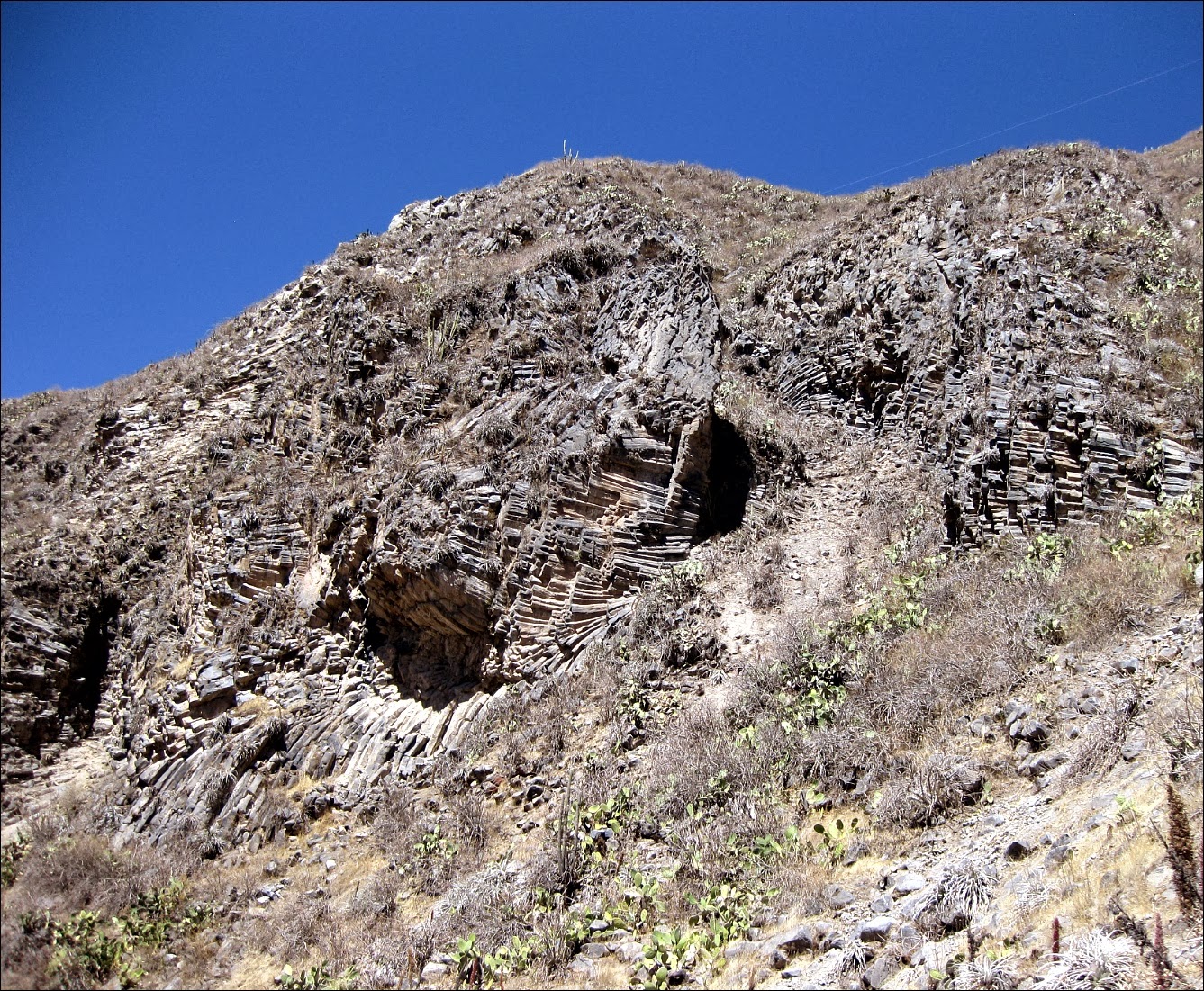
Rock formations near Cafayate


The city of Salta was nothing special, but the day and night I spent at Sayta ranch nearby was a real treat. We started with 3 hours of horse riding and continued through the day with more steak and wine than I could possibly consume (although I gave it a damn good try) and conversations degenerating as the evening wore on.


The view from bodega Domingo Molina
My next stop was Cafayate, a small town in the NW's wine region. The bus ride itself was another spectacular one and I spent a very pleasant few days exploring the incredible local geology and eating some of the best epanadas I've ever tasted (think small, baked Cornish pasty with a variety of fillings) as well as wine flavoured ice cream.
Vats of wine waiting for oaking or bottling


And of course I couldn't visit Cafayate without going to a Bodega (vineyard), or in fact four, of which Domingo Molina was my firm favourite for the wine, scenery, tour, and general hospitality.


I could have stayed in Cafayate for much longer but after four days it was time to take on the 25 hour bus ride to Puerto Iguazu, home to Iguazu falls. 

Sunday, 20 October 2013

Arica & San Pedro de Atacama, Chile


Alpacas graze in the stunning Lauca National Park
The border crossing into Chile was straightforward and I arrived into the city of Arica. A couple of days was enough to explore this coastal city, the nearby Lauca National Park, and practice my Spanish with an Argentinian and an Irish guy over some cheap but very drinkable Chilean wine - about the only thing cheap in Chile.


The Sun sets over Valle de la Muerte in San Pedro


I then headed off on another overnight bus to San Pedro de Atacama in the middle of the Atacama desert, supposedly the driest place on the planet. San Pedro was touristy, expensive, but strangely beautiful, with hazy mountains visible on the horizon and blazing sunshine in the daytime.


Floating in Laguna Cejar


Although expensive, the tours out of San Pedro into the surrounding area were also pretty amazing. The valley of the moon and the valley of death were completely surreal, with sand dunes and rock formations covered salt in that made me feel like I was on Arrakis, the planet from Dune.

Floating in the salty Laguna Cejar and watching the sunset over the desert whilst drinking a a pisco sour were also memorable experiences.


 On my final night in San Pedro I went on an astronomy tour into the desert where our French guide Alain and his wife had ten telescopes set up to watch the night sky focused on the moon, Venus, a red giant, several nebulae and other celestial objects.

Then it was time for another long bus ride and another border crossing into Argentina. 

Final days in Peru...


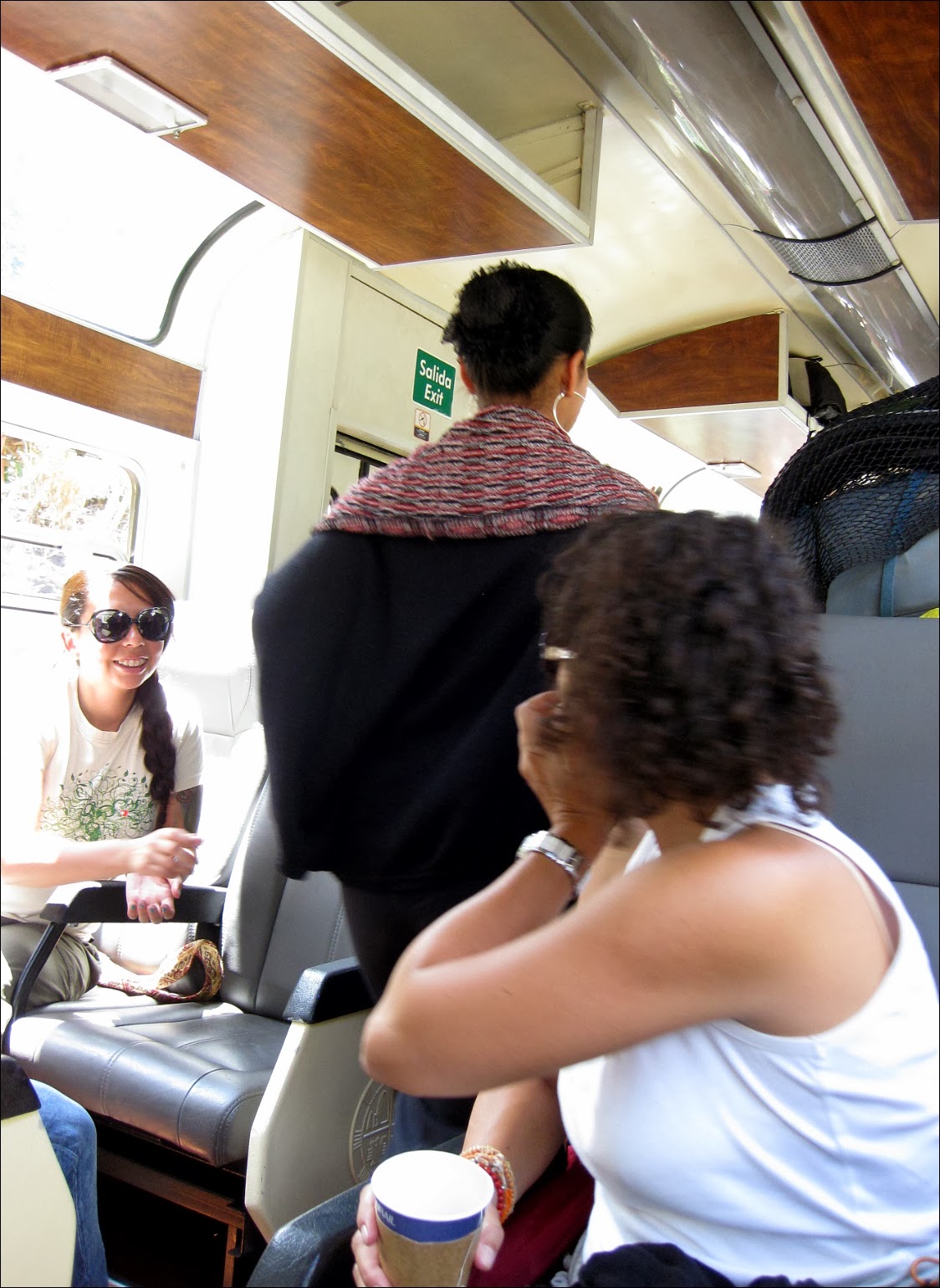
Peru rail staff double up as models 
Unfortunately, things didn't quite go to plan.
A one day nationwide transport strike meant we were stuck in Aguas Calientes that night and didn't reach Cusco until the following afternoon after the most bizzare train journey (complete with catwalk fashion show of alpaca jumpers and shawls).


Cusco's beautiful central plaza


A few final drinks with our trek group in Paddy's Irish bar that night and it was time for us all to part ways and for Josh to fly home the next day.

The ruins of Sacsaywaman overlooking Cusco
I spent the next five days in Cusco exploring the city, visiting local ruins and markets and recovering from the trek. I was also gearing myself up as my next stop was to leave Peru for Chile. Finally I booked my last overnight bus in Peru and headed towards the border. 


Saturday, 12 October 2013

The Inca trail & Machu Picchu


Looking fresh at the start of the trail
The ruins of Llaqtapata
 After a day in Cusco it was time to embark on the Inca trail. After a brief stop in Ollybatrambo to pick up hiking poles, snacks and breakfast, we were dropped off at km 88, the start of the trail.


In a great group of 16 with two guides, we spent the next 3 days hiking through amazing scenery that changed from antiplano to jungle, stopping at several Incan sites along the way.


The first day eased us in gently but the second day of almost continual climbing was really tough going, and the third day with over 3000 steps downwards was pretty hard on the knees. But on the afternoon of the third day we reached our campsite just a short walk away from the final checkpoint before Machu Picchu.

With my usual limited fitness I had been pretty worried about the trek but both Josh and I held our own in a group of about five of us who led throughout most of the trek. Although it was still probably the hardest thing I'd done in a long time, if not ever. It was certainly too much for this little boy who was carried by his Dad in a backpack for most of the trek!
 On the fourth day, we packed up early (4am) and headed down to the checkpoint which opened at 5.30am. Sitting in the dark, knackered, with 100 other people waiting for the gate to open whilst listening to choice 80's and 90's music was a bit surreal but a moment I won't forget. Suddenly the gate opened and we all rushed forward to get to the Sun gate as quickly as possible and to our first glimpse of Machu Picchu.

However when we reached the Sun gate it was clouded over. We kept walking and finally, the clouds began to clear. We waited. It seemed like the clouds had cleared over every bit of the valley except the ruined city. Finally, the last clouds parted. The ruins of Machu Picchu are impressive in themselves but the backdrop against the mountains makes it pretty spectacular. And after three days of walking we'd earned the view.

We spent the rest of the day exploring the ruins close up before taking the bus down to the nearby town of Agues Calientes where we were due to take a train back to Cusco that night.


Thursday, 3 October 2013

Lake Titicaca take 2

Reed boats taking off from the floating islands
After taking a very cheap local bus and then a ridiculously overpriced tourist bus we managed to get directly from Colca Canyon to Puno, on the Peruvian shores of lake Titicaca.


Josh on the lookout


The next morning we headed out to the ultra touristy but still interesting floating Uros islands, a group of 70+ small islands make completely of reeds by the communities that live on them.


The view from Taquille island


The boat then headed onto Taquile Island for great views across lake Titicaca and some community tourism before heading back to Puno.

With time against us we left Puno early next morning for our final stop together, Cusco. 

Arequipa & Colca Canyon

 Arriving early the next morning in Arequipa we spent the next few days exploring this pretty colonial city and coming up with a plan for our trip to Colca Canyon.


The beautiful Santa Catalina Monastery


We finally decided to take a ridiculously early tourist bus at 3am to Cabanaconde, the setting off point for exploring the canyon, but to do the rest of the trip ourselves.

The bus stopped on the way at the condor cross, a lookout famed for being able to see sweeping condors at the right time of day and we managed to see about 6 or so gliding on the thermals.


Preparing for takeoff


We then packed up our daypacks with overnight gear and enough water for two days, dropped off our main packs at the hostel, and headed off into the canyon.


San Galle oasis at the bottom of the canyon


We arrived almost 3 hours later completely knackered at the Oasis town of San Galle, having timed our steep decent into the canyon perfectly with the hottest part of the day.

Two hours later, refreshed from food and a dip in a local pool, we started off again for the small village of Cosñirhua, where we spent the night with a lovely local family, one of two in the village who offer meals and accommodation to weary trekkers.


One of our lovely hosts


Having the opportunity to practice my basic Spanish with locals amongst beautiful scenery was a real highlight and I wished we'd had time to spend a few more nights down in the canyon.

Amazing rock formations in Colca
We set off the next morning for the gruelling 5 1/2 hike that would take us out of the canyon, climbing steadily for about 4 hours and an elevation of  around 1000m. Back in Cabanaconde that night we slept like babies but feeling significantly more confident about our upcoming Inca trail. 

Wednesday, 2 October 2013

Paracas & Nazca


Humboldt penguins on one of the Ballestas islands
 Our next stop after Lima was the small coastal town of Paracas, where we spent just long enough to get a boat out to the Ballestas islands, known for its sea lions and huge population of birds, and do a land tour of the peninsula, a national park with interesting geological features.


Red sand in the Paracas National Reserve
 From Paracas we headed to Nazca and next morning prepared ourselves with anti-sickness tabs for our half hour flight over the Nazca lines in a tiny 4 seater plane.
The flight over the desert was amazing (photos really don't do it justice), and the pills did their job, albeit leaving us extremely sleepy for several hours afterwards.
The hands and the tree patterns as seen from the air


That evening we finished up with a great planetarium show that explained some of the many theories behind the lines before hopping on another overnight bus.